
Over the past few months, something fundamental has shifted in what AI can actually do. Not in a theoretical, Silicon Valley hype-cycle kind of way. In a practical, I-use-this-every-single-day, it-changed-how-I-work kind of way. And the gap between what’s now possible and what most people think is possible has gotten enormous.
I want to tell you what’s actually happening — and more importantly, what you can do about it right now to get ahead.
The Moment It Clicked For Me
I want to be real with you. I’m a tech guy. I’ve been deep in this world for years. And even I had my jaw on the floor recently.
A few weeks ago, I was working on a project that would normally take me the better part of a day — research, drafting, organizing, building out the deliverable. Instead, I described what I needed in plain English, gave the AI the right context about the project, and walked away. When I came back, the work was done. Not a rough draft I had to fix. The finished thing. Better than I would have done myself in twice the time.
I am not exaggerating. That was my Tuesday.
I’m far from the only one having this experience. Tech founders, managing partners at law firms, consultants, strategists — people across industries are having the same realization at the same time: this is not the AI you tried two years ago. The models available today are unrecognizable from what existed even six months ago. If you tried ChatGPT back in 2023 and thought “this makes stuff up” or “this isn’t that impressive” — you were right. But that version of AI is ancient history now.
“We’re not making predictions. We’re telling you what already happened in our own work — and letting you know that you’re next.”
Most People Are Stuck on Level One
Here’s what I’ve noticed working with my clients: almost everyone is using AI at what I’d call Level One. You’re typing questions into ChatGPT the same way you’d type them into Google. Quick lookups. Simple questions. Maybe drafting a short email or asking it to explain something.

And that’s fine — it works for that. But it’s like buying a Ferrari and only driving it to the grocery store. You’re using maybe 5% of what these tools can do right now.
The phrase I keep hearing from smart, capable people is: “I don’t know what I don’t know.” That’s not a failure of intelligence. It’s just the reality of a technology that’s moving faster than any of us can keep up with on our own.
So let me sketch out the full picture for you.
Level One: AI as a Search Engine
Where most people are right now.
You ask questions. You get answers. You might use it to draft an email or summarize an article. It’s helpful, but you’re barely scratching the surface. The AI doesn’t know anything about you, your business, your goals, or your context. Every conversation starts from zero.
Level Two: AI as a Thinking Partner
Where the real advantage begins.
This is the level where things get genuinely transformative — and it’s where I’ve been spending most of my time lately. At Level Two, you’re not just asking the AI questions. You’re working with it. You’re giving it context about who you are, what you’re trying to accomplish, and what matters to you. You’re using it to pressure-test your ideas, challenge your assumptions, and find the blind spots in your thinking.
Tools like Claude’s Cowork mode let you do something that wasn’t possible even a few months ago: you can give the AI access to your actual files and documents, connect it to your email and calendar, and have it work alongside you on real tasks. Not hypothetical tasks. Your actual Tuesday morning.
Here’s a short list of things that are possible right now at Level Two that most people haven’t even considered:
- Have AI review a contract and flag every clause that could hurt you — in seconds, not hours
- Feed it a messy spreadsheet and ask it to find the story in the data and build the model
- Dictate your rough thoughts on a topic and have it draft a polished proposal in your voice
- Ask it to play devil’s advocate on your next big business decision — “how could this fail?”
- Give it your quarterly numbers and ask it to identify trends you might be missing
- Use it as an interview partner while writing a book, memoir, or personal project
- Build a small automation that summarizes every long email before you read it
- Have it analyze a competitor’s public content and identify gaps in your own positioning
None of this is science fiction. I did several of these things this week.
“AI will not take your job. But someone who knows how to use AI properly will.”
Level Three: AI as a Builder
Where entire businesses get reimagined.
At Level Three, you’re not just working with AI — you’re building through it. This is where tools like Claude Code come in, and it’s where things start to feel a little like science fiction even to me.
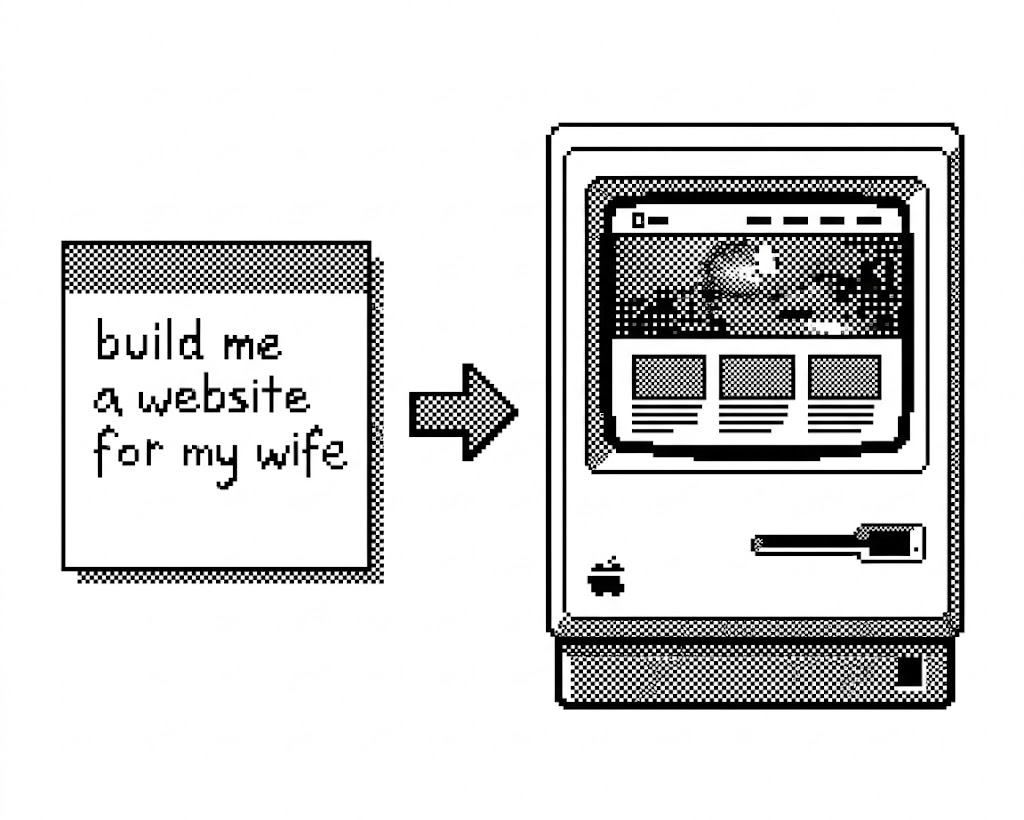
At this level, you can describe an app, a tool, a system — in plain English — and have AI build it for you. I’m not talking about a rough wireframe. I’m talking about a working product. It writes the code, tests it, refines it, and delivers something functional. A year ago this wasn’t possible. Six months ago it was clunky. Today it’s remarkable.
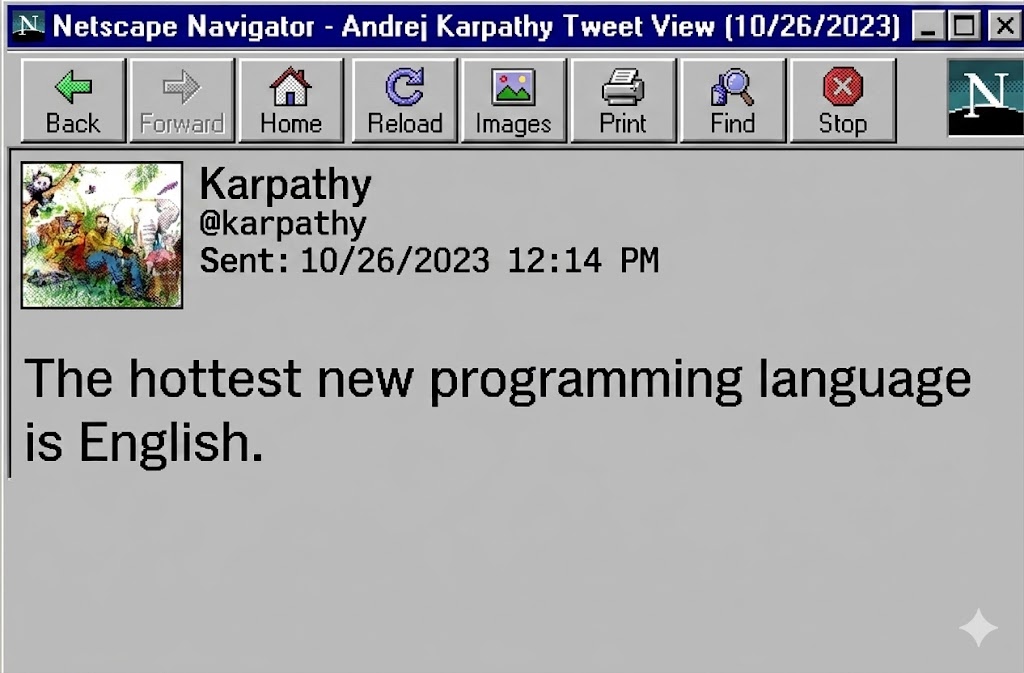
You don’t need to be a programmer. You don’t need a technical background. You need to be able to clearly describe what you want, give it good context, and iterate on the result. That’s it. The hottest new programming language is English.
The Secret Ingredient: Context and Prompt Design
Here’s the thing that separates the people getting mediocre results from AI and the people getting extraordinary results: it’s not the tool. It’s what you give the tool to work with.
Think of it this way. If you walked up to the smartest consultant in the world and said “help me with my business,” they’d stare at you. They need context. They need to understand your situation, your goals, your constraints, your audience. The more relevant information you provide, the better their advice will be.
AI works exactly the same way.
The people getting the most value from these tools have learned something that sounds simple but changes everything: how you talk to AI determines what you get back. This is what people in the industry call “prompt design,” and it’s a skill — not a talent. It can be taught. It can be practiced. And it gives you a massive edge once you understand it.
A few principles that immediately improve your results:
- Give it a role. Tell the AI who it should be: “You are an experienced contract lawyer reviewing this agreement for a small business owner.” Instant upgrade.
- Give it context. Don’t just paste a document and say “summarize this.” Tell it why you need the summary, who it’s for, and what decisions depend on it.
- Give it examples. Show it what good looks like. Paste a previous email you liked and say “write the next one in this style.”
- Iterate. The first answer is a starting point. Push back. Ask follow-up questions. Say “that’s close, but make it more direct” or “what are you assuming here?” The magic is in the back-and-forth.
This is the part that excites me most as someone who helps people navigate technology. Because this isn’t about learning to code. It’s about learning to think clearly and communicate precisely — which are deeply human skills. The better you are at articulating what you actually want, the more powerful these tools become.
“The goal isn’t to outsource your thinking. It’s to accelerate it.”
Why I’m Telling You This Now
I’ll be direct. We’re standing on a precipice right now. The technology has taken a massive leap in just the last few months, but most people haven’t caught up to what that means for their day-to-day work. There is a brief window — right now — where the people who learn these tools and develop real fluency with them will have an extraordinary advantage.
That window won’t stay open forever. Once everyone figures this out, the advantage disappears. But right now? The bar is on the floor. Most of your competitors haven’t even started.
I’ve spent the last several months going deep on all of this — studying, testing, building, and learning what actually works versus what’s just hype. And I want to help you do the same thing, without you having to spend hundreds of hours figuring it out on your own.
That’s what I do. I help humans navigate technology. Not by replacing your judgment or your expertise, but by showing you how to amplify it. The tools change. The need for a guide who can translate what’s happening and help you apply it to your specific situation — that doesn’t go away. If anything, it matters more now than ever.

What I’d Like You to Do
If any of this resonates — if you’ve been feeling like AI is moving fast and you’re not sure where you fit in — I want you to know that’s completely normal. The most common thing I hear from smart, successful people right now is exactly that feeling.
Here’s what I’d suggest: book a session with me. Not a sales call. A real conversation about where you are with AI, what you’re trying to accomplish in your work and life, and where the biggest opportunities are for you specifically. I’ll show you what’s possible at Level Two and Level Three, and we’ll figure out together what makes sense for your situation.
The people who will come out of this transition best are the ones who start now — not with fear, but with curiosity. I’d love to help you be one of them.
Looking forward to hearing from you.
Justin
P.S. — If you’re curious and want to start experimenting today, sign up for the paid version of Claude (claude.ai) — it’s $20/month. Make sure you select the best model available in the model picker. Don’t just ask it quick questions. Give it a real task from your actual work, provide plenty of context about what you need and why, and see what happens. You might be shocked.